Wednesday, April 6, 2011

017: The Heidelberg Project


From their website:

"The focus of the Heidelberg Project is rooted in the need to improve the under-resourced and horribly blighted Detroit community where the project was founded.

We continue this mission, as we began, by providing hope and inspiration to local children through art and education programs and hands-on workshops.

The HP works with neighborhood children to educate them on art, community and environment. These children walk to school past burned-out houses, rubble, debris, crime and decay. Our purpose is to offer them another view, another perspective - to positively change the environment the children see every day. In the process, we help build self-esteem, encourage cooperation and foster a sense of pride in their community. The HP continues to work with local students throughout Metro Detroit through the ACE2 program and guided tours."


images from: the heidelberg project: home sweet home
Dustin Downing


The Heidelberg Project is one of Detroit's most famous public works of art. It has been lauded for transforming the area in which it operates, making it a much safer neighborhood, and for inspiring the creation of ACE2 which works with local student's to supplement their educations with art related curriculum. As a believer in collective public art, I can get behind the motives for creating the HP. I understand how painting polka dots on an abandoned building somehow makes it less frightening and affixing stuffed animals softens the facade of a burnt out home and makes it more tolerable. I have to question, however, how this kind of art which draws attention to the problem with out proposing a sustainable solution really effects the quality of life in the city. Yes, the Heidelberg is safer, but only because we have made a spectacle out of the problem. The captivated tourist is staring at amazement at the same type of pornographic imagery he or she sees in Yves Marchand and Romain Meffre's Ruins of Detroit. In Detroit, at this moment, anything may be, possible; however, we have a responsibility as designers to consider the impression our work makes on the city and its power to act as a catalyst for change and not as a neon sign pointing to its problems.

Tuesday, March 29, 2011

016: Loveland

LOVELAND is a community investment program in which partners are invited to purchase square inches of land in Detroit for $1 each. These inch-vestments are compiled together into "microhoods" which are developed into visible park and garden spaces around the city. The LOVELAND team, comprised of Jerry Paffendorf, Mary Lorene Carter, and Larry Sheradon, have developed an unique fundraising framework which engages the community and increases the property's economic value and perhaps more importantly its economic value.


The following video is from the TEDxDetroit conference and outlines all the amazing work Team LOVELAND is doing:


Monday, March 28, 2011

015: The Memphis Manifesto

Re-posted from Detroit Lives!


Lately, there’s a lot of talk circulating about the value of creative industry in Detroit– that is, economic activity associated with more brain power and less physical power. Creative industries include advertising, architecture, design, fashion and film to name just a few. The Detroit Creative Corridor Center has taken on a role locally to cultivate that industry as an attraction/retention tool. Richard Florida, renowned “Creative Class” guru would tell you that “human creativity is the ultimate economic resource” creating opportunities in places like Detroit that minimize the effect of largely having been an industrial city in the past. Trouble is, it’s not just a switch you can flip, there are many factors that go in to creating that environment. Enter Memphis, one city we can take notes from in assisting with that process.

In 2003, leaders and creatives convened in Memphis to establish a roadmap of how their city could attract and retain creative talent so as to create more economic activity around them. What resulted from those meetings was the Memphis Manifesto, something that Detroiter’s can look at and take a few lessons from as we push forward in similar capacities. In many ways, efforts like the Detroit Declaration have taken steps such as these addressing the notion of cultivating creativity, improving quality of place and embracing diversity. The Memphis Manifesto takes it one step further, drilling down just a little bit more as to how we can actually “cultivate creativity” in Detroit and the factors that influence that goal. Have a look at the principles created in Memphis and think about the ways that we can piggyback those actions in our efforts here.
The Creative 100 are dedicated to helping communities realize the full potential of creative ideas by encouraging these principles:

1) Cultivate and reward creativity. Everyone is part of the value chain of creativity. Creativity can happen at anytime, anywhere, and it’s happening in your community right now. Pay attention.

2) Invest in the creative ecosystem. The creative ecosystem can include arts and culture, nightlife, the music scene, restaurants, artists and designers, innovators, entrepreneurs, affordable spaces, lively neighborhoods, spirituality, education, density, public spaces and third places.

3) Embrace diversity. It gives birth to creativity, innovation and positive economic impact. People of different backgrounds and experiences contribute a diversity of ideas, expressions, talents and perspectives that enrich communities. This is how ideas flourish and build vital communities.

4) Nurture the creatives. Support the connectors. Collaborate to compete in a new way and get everyone in the game.

5) Value risk-taking. Convert a “no” climate into a “yes” climate. Invest in opportunity-making, not just problem-solving. Tap into the creative talent, technology and energy for your community. Challenge conventional wisdom.

6) Be authentic. Identify the value you add and focus on those assets where you can be unique. Dare to be different, not simply the look-alike of another community. Resist monoculture and homogeneity. Every community can be the right community.

7) Invest in and build on quality of place. While inherited features such as climate, natural resources and population are important, other critical features such as arts and culture, open and green spaces, vibrant downtowns, and centers of learning can be built and strengthened. This will make communities more competitive than ever because it will create more opportunities than ever for ideas to have an impact.

8 ) Remove barriers to creativity, such as mediocrity, intolerance, disconnectedness, sprawl, poverty, bad schools, exclusivity, and social and environmental degradation.

9) Take responsibility for change in your community. Improvise. Make things happen. Development is a “do it yourself” enterprise.

Ensure that every person, especially children, has the right to creativity. The highest quality lifelong education is critical to developing and retaining creative individuals as a resource for communities.
We accept the responsibility to be the stewards of creativity in our communities. We understand the ideas and principles in this document may be adapted to reflect our community’s unique needs and assets.
The undersigned commit to our communities and each other that we will go back to our communities to infuse these ideas into our social lives and public policies and share the accomplishments with each other so that we all can move forward and succeed together in a more creative existence.

014: Bloom Town Detroit


Bloom Town is a community gardens project located between Clay St. and Philadelphia Ave. on Oakland St. in Detroit. The gardens are planted with monochromatic blooms which flower with different colors throughout the year. Each of the gardens is planted within the foundation walls of a recently demolished house, tracing the history of the neighborhood, while at th same time building anticipation for and marking the communities re-birth. The changing colors of the gardens hope to increase the flow and movement around this particular neighborhood, creating places of calm, community, and activity, similar to those gardens established in the 1970s in New York.


The gardens hope to increase interaction between the members of the community in which they are planted.  The project hopes to set up a foundation which will allow the gardens to continue into the future both financially and with adequate volunteers for maintenance. 


The interaction between Bloom Town's founder, Ellen Donnelly, and the residents of the community in which the project takes place is evidence of what these gardens are capable. Although they supply neither food nor economic sustenance, they are building a sense of worth and changing the local idea of what this community, in one of the most blighted areas of inner-city Detroit, deserves. 


Tuesday, February 15, 2011

013: Single Barrel Detroit


Bringing life back into some of the iconic, abandoned buildings of Detroit, Single Barrel Detroit beautifully films local bands in historic settings around the city. 


re-posted from Detroit Lives!


"It’s no secret that Detroit is such an interesting conglomerate of energy– entrepreneurship, art, new media development and everything in between collide to create a doer landscape unlike any other place in America. Detroit is a playground for those hungry to build something. In no other American city do you get such a cocktail of opportunity and possibility like you do in Detroit. As a result, there are all kinds of exciting efforts that combine so many different pieces of the puzzle.

The ragtag band of talent that is Single Barrel Detroit are just one example of this kind of innovation. These folks combine the idea of exploration and discovering potential in Detroit through music. They film local bands with beautiful production quality in unique and inspiring locations as a way of showcasing not just the thriving local music scene, but as a window in to the fascinating nooks and crannies of Detroit. All in, it’s great film making and a dynamic addition to the plot line that tells the fascinating story of Detroit. Check out some of their work below, and visit their site for a lot more content (nearly 20 bands in total)."


Monday, February 14, 2011

012: Ruin Porn


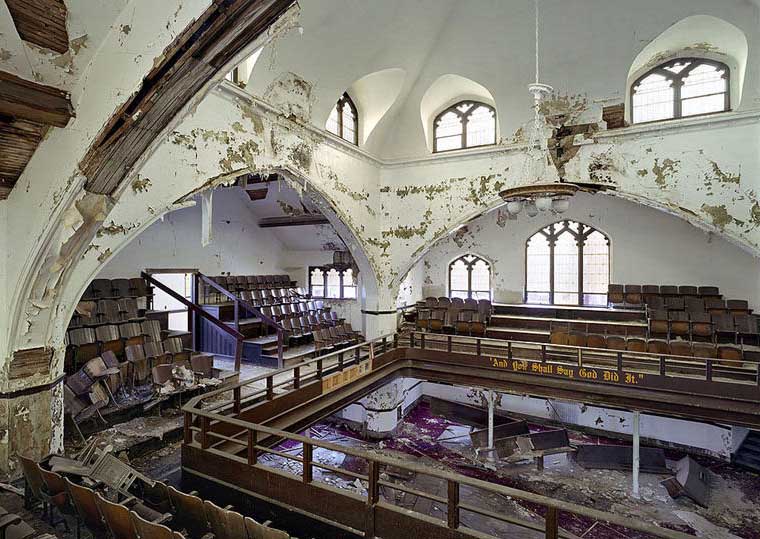
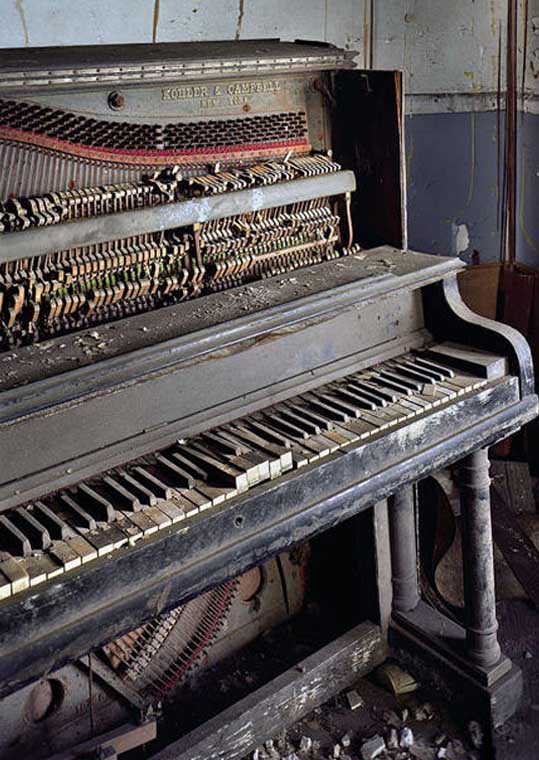
Yesterday's post acts a precursor to an article recently posted in Guernica by John Patrick Leary of the University of Detroit Mercy, Detroitism. The full article can be found here, but a poignant excerpt follows:


 "Ruin photography, in particular, has been criticized for its “pornographic” sensationalism, and my bookseller friend won’t sell much of it for that reason. And others roll their eyes at all the positive attention heaped on the young, mostly white “creatives,” which glosses over the city’s deep structural problems and the diversity of ideas to help fix them. So much ruin photography and ruin film aestheticizes poverty without inquiring of its origins, dramatizes spaces but never seeks out the people that inhabit and transform them, and romanticizes isolated acts of resistance without acknowledging the massive political and social forces aligned against the real transformation, and not just stubborn survival, of the city. And to see oneself portrayed in this way, as a curiosity to be lamented or studied, is jarring for any Detroiter, who is of course also an American, with all the sense of self-confidence and native-born privilege that we’re taught to associate with the United States."

011: The Ruins of Detroit-pLog

Re-posted from DenverPost.com

Up and down Detroit’s streets, buildings stand abandoned and in ruin. French photographers Yves Marchand and Romain Meffre set out to document the decline of an American city. Their book The Ruins of Detroit“, a document of decaying buildings frozen in time, was published in December 2010.

From the photographers’ website:
Ruins are the visible symbols and landmarks of our societies and their changes, small pieces of history in suspension.
The state of ruin is essentially a temporary situation that happens at some point, the volatile result of change of era and the fall of empires. This fragility, the time elapsed but even so running fast, lead us to watch them one very last time : being dismayed, or admire, making us wondering about the permanence of things.
Photography appeared to us as a modest way to keep a little bit of this ephemeral state.